





Midjourney Guide
What keeps Midjourney in the toolkit for a lot of creative teams is not just image quality in the abstract. It is the feeling that, more often than not, the model arrives with stronger taste already baked in. If the job is to discover a look, a mood, or a visual direction quickly, that matters a lot more than perfect literal obedience to the prompt.
Midjourney behaves less like a generic image generator and more like an aesthetic engine.
#Where Midjourney tends to shine
- concept exploration
- posters and covers
- brand moodboards
- style direction experiments
If the main question is "what should this look like?" rather than "can the model follow this instruction literally?", Midjourney is often the more interesting place to start.
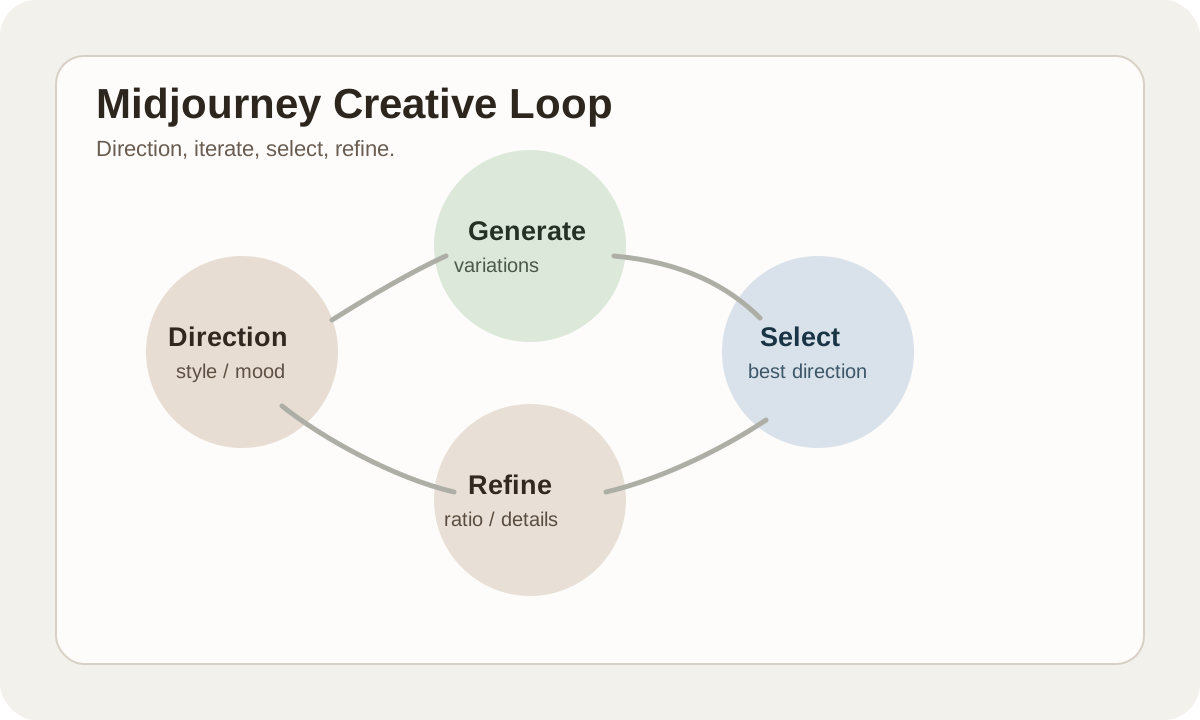
#What actually changes the output
The biggest levers are usually:
- subject clarity
- composition
- style direction
- aspect ratio
- iteration discipline
Long prompts alone do not create better work. Good Midjourney usage is usually about controlling those variables on purpose.
#Where it is less ideal
Midjourney is not always the first choice when:
- precise text rendering matters
- commercial layout control matters more than atmosphere
- literal instruction following is the priority
- the workflow depends on heavy post-generation editing
#Bottom line
Midjourney is still one of the strongest tools for discovering visual direction quickly. If atmosphere, style, and creative range matter more than literal control, it remains one of the best options in the stack.
