






Code Interpreter Guide
The old label Code Interpreter is still widely used, but the more accurate product framing today is Data analysis with ChatGPT, sometimes called Advanced Data Analysis. If you still think of it as a minor beta feature, you are underestimating how useful it has become for file analysis, charting, Python execution, and fast exploratory work.
#What it is best for
- cleaning Excel, CSV, and PDF data files
- fast exploratory analysis
- generating charts, summary tables, and draft reports
- validating repeatable processing logic
- letting AI write executable Python before you do it manually
It is especially useful when you know the business question but do not want to hand-code the whole analysis from scratch.
#What it actually does
A practical mental model looks like this:
- it reads uploaded files
- it writes and runs Python in a sandbox
- it returns charts, tables, files, or code
- it adjusts the analysis when you ask follow-up questions
It speeds up analysis. It does not replace business judgment.
Two constraints matter in practice:
- it cannot freely make external network requests from the sandbox
- the environment is session-scoped, not a long-lived notebook
#A more reliable workflow
#Explain the files and the goal first
This is much better than saying "analyze this file":
- what the files are
- what business question matters most
- what output you want at the end
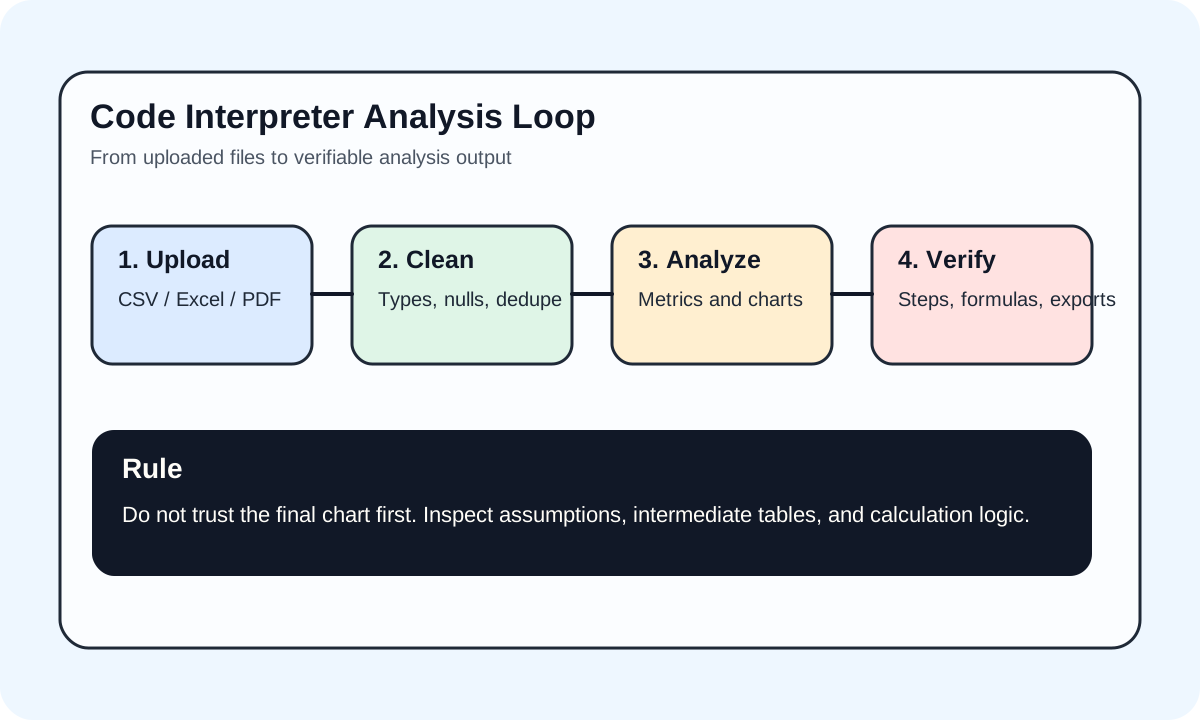
#Clean first, analyze second
Many failures come from dirty source data, not weak analysis.
Safer order:
- inspect columns and types
- handle missing values and duplicates
- verify join keys
- then calculate metrics and generate charts
#Ask for intermediate steps
For anything non-trivial, ask it to show:
- assumptions
- cleaning steps
- intermediate samples
- formulas used
That is much safer than trusting the final chart alone.
#High-value use cases
- finance and operations reporting
- hiring and HR data cleanup
- marketing and channel analysis
- file transformation and export
#Where people get misled
The first result often looks plausible. That is exactly when you should check:
- whether the formula is correct
- whether the grouping logic makes sense
- whether joins introduced duplicate counting
#Bottom line
Code Interpreter is best treated as a fast analytical sandbox. It is strong at getting you from messy files to a first serious analysis quickly, but it still needs human verification before the result becomes a decision or a published report.