






Hex Guide
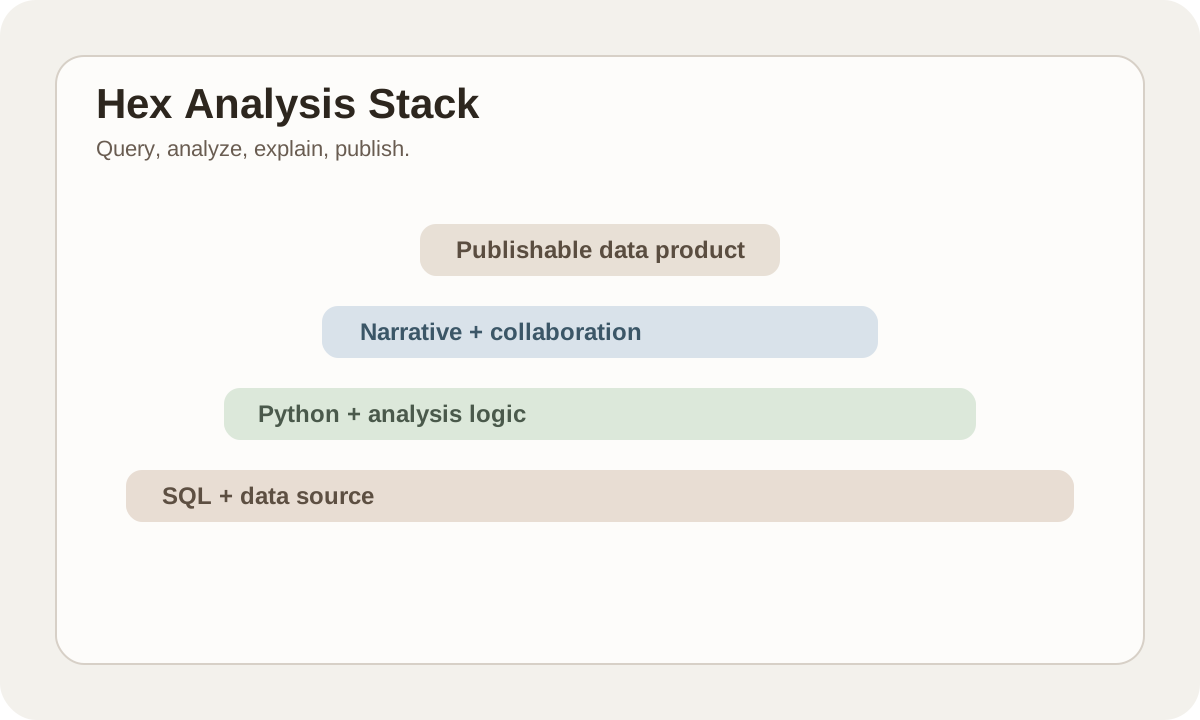
Hex starts making sense when analysis stops being a solo activity. A lot of teams are already pretty good at exploring data, but the handoff still breaks down. Somebody writes SQL, somebody opens a notebook, somebody exports screenshots, and then the whole thing becomes hard to revisit a week later. Hex is appealing because it keeps more of that work in one place and makes it easier to share the reasoning, not just the answer.
If classic BI tools feel like finished showrooms, Hex feels like a collaborative analysis workshop.
#Where Hex feels genuinely useful
In practice, Hex tends to fit teams working in the space between classic notebooks and classic BI dashboards. That usually means:
- SQL and Python are both part of normal work
- analysis is iterative rather than fixed
- stakeholders need to review and interact with the result
- notebooks sometimes need to become lightweight internal apps
That is also why people often struggle to categorize it at first. It is not really trying to replace Jupyter line for line, and it is not trying to become a conventional dashboard tool either.
#What Hex does better than the usual patchwork
- SQL and Python in the same project
- better collaboration than standalone notebooks
- easier delivery to business users
- stronger reuse of analytical work
If you have ever felt that analysis work gets fragmented the moment it has to be shown to somebody else, this is the part Hex is trying to fix. It is less a notebook replacement and more a shared workspace for analytical work that is still evolving.
#Hex vs Jupyter vs BI tools
#Jupyter
Best for individual experimentation and research-style iteration.
#BI tools
Best for standardized reporting and consumption.
#Hex
Best for the space in between: exploratory analysis that still needs delivery, collaboration, and reuse.
#Who should use Hex
- data analysts
- analytics engineers
- data scientists
- BI or data-product teams
#Bottom line
Hex is strongest when analysis does not stop at "the analyst figured it out." It becomes useful when the work needs to be shared, explained, revised, and reused across a team.