

视频简介
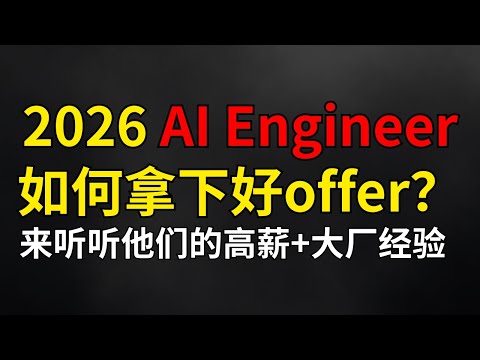
这个视频我将用最直白、最不绕弯的方式,把很多同学对 AI Engineer / Solution Architect 的幻想拉回现实:你以为这是“学点AI就能上”的热门入门岗?抱歉,很多公司根本不存在真正意义上的“初级AI工程师”。这两个岗位更像是“能扛事的人”才能做的角色——要你能设计系统、能落地上线、能处理故障、能对结果负责。 我会在视频里拆解一个非常扎心的真相:证书确实好考,但面试官不买账。 你刷题拿到AWS/Azure/Google的证书,最多证明你会背概念;但面试更关心的是——你能不能把知识用起来?比如:为什么用这个云服务而不是另一个?RAG 的链路怎么设计才能稳定?权限、安全、监控、成本优化要怎么做?系统爆了你怎么救火?这些才是你能不能拿到Offer的关键。 同时我也会讲清楚澳洲市场的真实逻辑:很多 AI Engineer 面试,本质考的是 Software Engineering 基本功 + System Design + 工程化交付能力,AI知识反而经常以 case study 或应用场景出现。最后我会给你一个非常实操的转型策略:别再等“准备好”才行动——风口从来不等人。你要做的是先投简历、先面试、先摸清市场,然后用项目和能力补齐短板。如果你现在是 DevOps / SRE / Data / Full-stack,我还会告诉你:你不一定要死盯 AI Engineer,一个更现实的路径是 MLOps、Platform AI、AI Infra,这些岗位同样缺人、同样高薪、而且更适合你切入。 In this video, I will break down the real truth behind the “AI Engineer / Solution Architect” career path — in a way that’s direct, practical, and hopefully a little funny (because reality is already serious enough). A lot of people assume these roles are entry-level opportunities as long as you learn a bit of AI and build a small demo project. But here’s the uncomfortable truth: in many companies, there is no true junior AI Engineer or entry-level Solution Architect role. These positions are built for people who can take ownership, make technical decisions, and deliver systems that actually run in production. I will also expose one of the biggest misconceptions candidates have: certifications are easy to get, but they don’t guarantee interviews or offers. Passing AWS, Azure, or Google exams might prove you can memorize concepts, but interviewers care about something else entirely — whether you can apply those concepts in real-world scenarios. In the video, I will explain what hiring managers truly test for: Why would you choose one service over another? Can you design a complete system end-to-end? How would you build a stable RAG pipeline that doesn’t collapse in production? What about authentication, security, monitoring, cost optimization, and failure recovery? If the system breaks at 2 AM, can you actually fix it? I will also talk about what the Australian market really values. Many “AI Engineer” interviews are still heavily focused on software engineering fundamentals, system design, and engineering delivery skills. AI knowledge is important, but it often appears as applied case studies rather than purely theoretical questions. That’s why people who only know “prompting” or “chat-style RAG demos” struggle — because companies are hiring engineers, not just AI enthusiasts. Finally, I will give you a realistic transition strategy: stop waiting until you feel fully ready. Trends move faster than your comfort zone. If you wait for perfection, the opportunity will pass. Instead, apply early, interview early, learn fast, and iterate faster. And if you’re coming from DevOps, SRE, Data Engineering, or Full-stack development, I will show you that you don’t have to lock yourself into only “AI Engineer.” A smarter and often easier route is MLOps, platform AI, AI infrastructure, and production deployment — areas where demand is huge and engineering skills matter even more.