
Claude Guide
Claude is easy to misread if you treat it as just another chatbot. The better way to think about it is as a workflow stack built around reasoning, writing, persistent context, and coding. For many teams, the difference is not one slightly better answer. It is that Claude fits naturally into longer-running work.
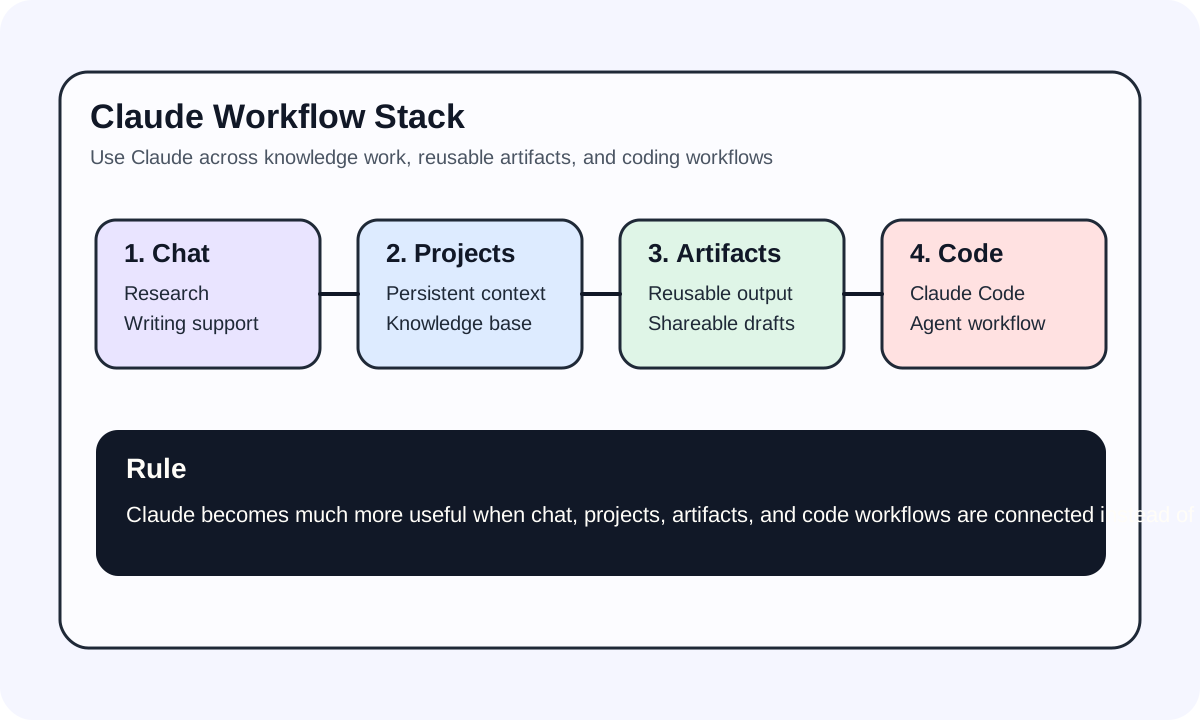
The product makes more sense when you split it up
Claude is easier to understand when you separate it into a few layers:
Claude.aifor chat, Projects, and knowledge workArtifactsfor reusable outputsClaude Codefor agentic coding in the terminal- the
Anthropic APIfor model access, tools, streaming, and structured output
That is why Claude often makes more sense as a workflow system than as a single feature.
Where Claude is strongest
- long documents and research-heavy context
- writing, rewriting, and summarisation
- code analysis, debugging, and review
- repeatable work that benefits from persistent context
If your work depends on continuity and stable expression, Claude usually feels stronger there.
The value is not one chat window
Many people try Claude a few times, ask generic questions, and decide it feels similar to everything else. The bigger difference shows up once the pieces connect:
- keep long-running material inside
Projects - save reusable outputs in
Artifacts - switch to
Claude Codefor engineering work - use the
Anthropic APIinside products
Once those layers connect, Claude stops feeling like "just chat."