
Vendor & Procurement Management
RFPs, comparison matrices, meeting minutes, and risk alerts
RFPs, comparison matrices, meeting minutes, and risk alerts
A reusable work template with realistic input, a defined output format and a human review point.
Run one real task, verify the critical facts and record the before-and-after time.
Many people think AI in procurement is just "help me write an RFP." That's only the shallowest layer. The real value is having AI align vendor information, surface risks early, and standardize the review process.
But this is also where things go wrong easily — if a summary is wrong, a clause gets missed, or a cost judgment is off, the decision-maker gets led astray by bad info.
What AI Does Best in Procurement
Bottom line: AI is good at organizing, comparing, questioning, and initial screening. It's not good at making final legal or finance decisions for you.
| Scenario | AI fit | Why |
|---|---|---|
| RFP draft | High | Fixed structure, clear fields |
| Vendor comparison matrix | High | Great for standardizing and aligning info |
| Meeting notes / follow-up | High | Quick action item extraction |
| Clause review checklist | Med-high | Good for listing check items, not for conclusions |
| Contract redline | Low | Must have legal review |
| Final procurement decision | Low | Needs budget, risk, and internal priority context |
Step 1: Write the RFP Clearly — Otherwise Comparison Is Pointless
Many vendor reviews fail because requirements were too vague from the start. AI is great at turning requirements into a structured RFP.
A Workable RFP Prompt
You are a procurement assistant. Generate a vendor RFP draft.

Background:
- use case: [e.g., AI customer support platform]
- team size: [e.g., 20 agents]
- budget range: [e.g., AUD 30k - 50k / year]
- timeline: [e.g., 6 weeks]

Must-haves:
- SSO
- audit log
- role-based access
- API access

Output:
- requirement list
- evaluation criteria
- submission format
- clarification questions
The biggest value of this output: all vendors answer within the same framework instead of talking past each other.
Step 2: Use a Comparison Matrix to Align Information
AI is great at turning multiple vendor proposals into one table. Compare at least these fields:
| Field | Why it matters |
|---|---|
| Pricing model | Annual, usage-based, or seat-based |
| Core features | Whether it meets real needs, not just brochure claims |
| Security | SSO, RBAC, audit log, data retention |
| Integration | API, webhook, Slack, CRM, ERP, etc. |
| Support / SLA | Clear response times when things break |
| Exit risk | Data export, migration cost, lock-in risk |
Recommended output format
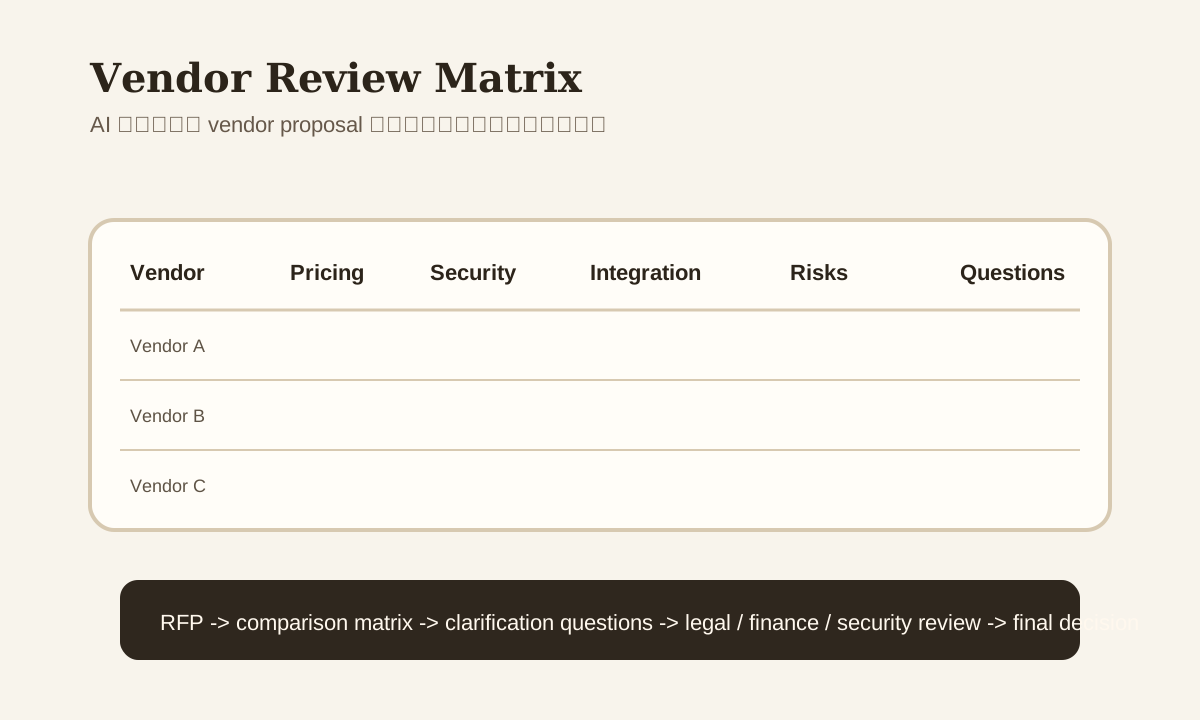
Vendor | Pricing | Core features | Gaps | Risks | Questions
Simple format, but excellent for first-round procurement screening.
Step 3: Have AI Generate Clarification Questions
Many teams reviewing vendors lose out because they don't ask the right questions. AI is good at auto-generating questions from proposals:
- Where is data stored (which region)?
- What's the default retention policy?
- What's the API rate limit?
- How long after contract termination can you get data back?
- Is there SLA breach credit or compensation?
These questions are worth more than "what other features do you have."
Step 4: Clause Review Can Only Be a Checklist — Not a Legal Substitute
This is the most important boundary.
AI can help with:
- Flagging clauses that need close review
- Summarizing termination, renewal, liability, and data processing terms
- Generating internal review notes
AI should NOT:
- Redline contracts directly
- Judge whether clauses are legally valid
- Output a final legal opinion on behalf of the company
A more reliable workflow:
contract -> AI extracts key clauses
         -> internal summary
         -> legal / finance review
         -> final negotiation notes
In Procurement, Only Looking at Price Is the Biggest Trap
Cheap doesn't mean cost-effective. Many vendors look affordable upfront but make it up later through:
- Implementation fees
- Seat expansion costs
- Premium support charges
- API overage fees
- Migration / export costs
Break total cost into buckets rather than just reading the first-page quote.
| Cost bucket | Worth a separate look? |
|---|---|
| License / subscription | Yes |
| Implementation | Yes |
| Training / onboarding | Recommended |
| Support | Recommended |
| Usage overage | Yes |
| Exit / migration | Recommended |
A Practical Vendor Review Flow
- AI generates RFP draft
- Collect vendor replies
- AI creates comparison matrix
- AI generates clarification questions
- Key clauses go to legal / finance / security review
- Humans make the final decision
The point of this flow isn't "let AI decide." It's making sure the information is complete and organized before the decision.
Common Mistakes
| Mistake | Problem | Better Approach |
|---|---|---|
| Ask AI to recommend the best vendor | Missing internal context, conclusions drift | Build a matrix first, then decide manually |
| Only compare features, not contracts | Real risk is often in terms and exit clauses | Pull clause review out separately |
| Only look at the quote | Miss implementation and overage costs | Look at total cost |
| Have AI edit contracts directly | High risk, unclear accountability | AI does checklist and summary only |
Practice
Pick 2 vendors you're currently comparing. Organize this input:
- use case
- budget range
- must-have requirements
- 2 proposal summaries
Then have AI output:
- Comparison matrix
- Clarification questions
- Risk checklist
- Decision memo draft
Then have procurement, security, finance, or legal do the final review.