
Intro to Responsible AI
AI ethics, fairness, and Google's 7 AI principles
AI ethics, fairness, and Google's 7 AI principles
A reusable prompt, example set, evaluation record or safety rule with its task boundary preserved.
Run at least one representative case, inspect the result and record what still requires human review.
Source: Google Cloud "Introduction to Responsible AI" Course Level: Beginner Estimated Time: 15 mins
What Is Responsible AI?
As AI gets more powerful, we can't just ask "what can it do?" — we need to ask "what should it do?" Responsible AI is a set of development guidelines that ensure AI is designed and deployed in ways that are fair, safe, and beneficial to society.
Google's 7 AI Principles
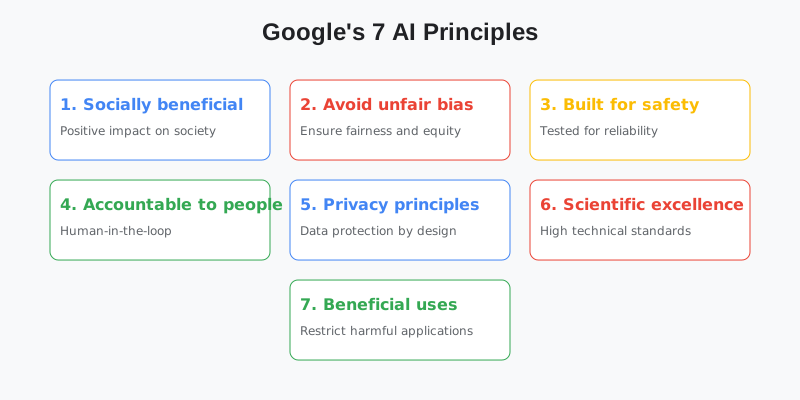
Google published these 7 principles in 2018 as the foundation for all their AI products:
- Be socially beneficial: Applications in healthcare, energy, etc. that actually help people.
- Avoid creating or reinforcing unfair bias: Especially critical in sensitive areas like hiring and lending.
- Be built and tested for safety: Prevent uncontrollable risks.
- Be accountable to people: Support human feedback and error correction.
- Incorporate privacy design principles: Keep data secure and protect user privacy.
- Uphold high standards of scientific excellence: No cutting corners on rigor.
- Be made available for uses that accord with these principles: Refuse harmful use cases.
Why Should You Care About Responsible AI?
Ignore these principles and AI can cause real damage:
1. Unfair Bias
If training data contains biases, the model learns them. A resume-screening AI trained on historically male-dominated data might unconsciously penalize female applicants.
2. Lack of Transparency
AI often acts as a "black box." If an AI denies your loan application but can't explain why — that's unacceptable both legally and ethically.
3. Privacy Concerns
AI needs tons of data for training. Handle it poorly and users' personal information could leak or get "memorized" and regurgitated by the model.
What Can You Do?
As a user or developer working with Gen AI tools, take these steps:
- Critical Thinking: Always maintain a questioning attitude. Don't blindly accept AI output.
- Inclusive Testing: Use diverse datasets during development to check for bias.
- Data Privacy: Don't feed sensitive company data or personal private information into public AI models.
Summary: Responsible AI isn't a "brake" on innovation — it's a "seatbelt" that ensures AI technology can develop sustainably over the long term.